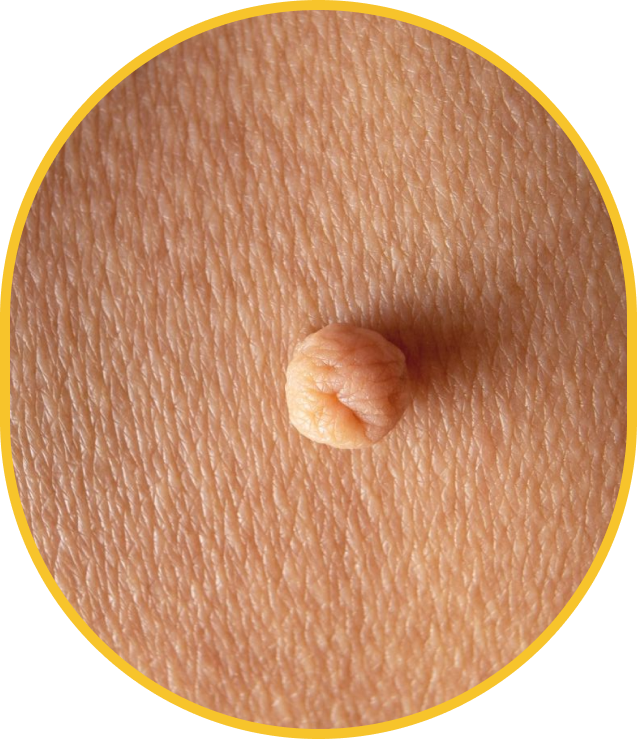

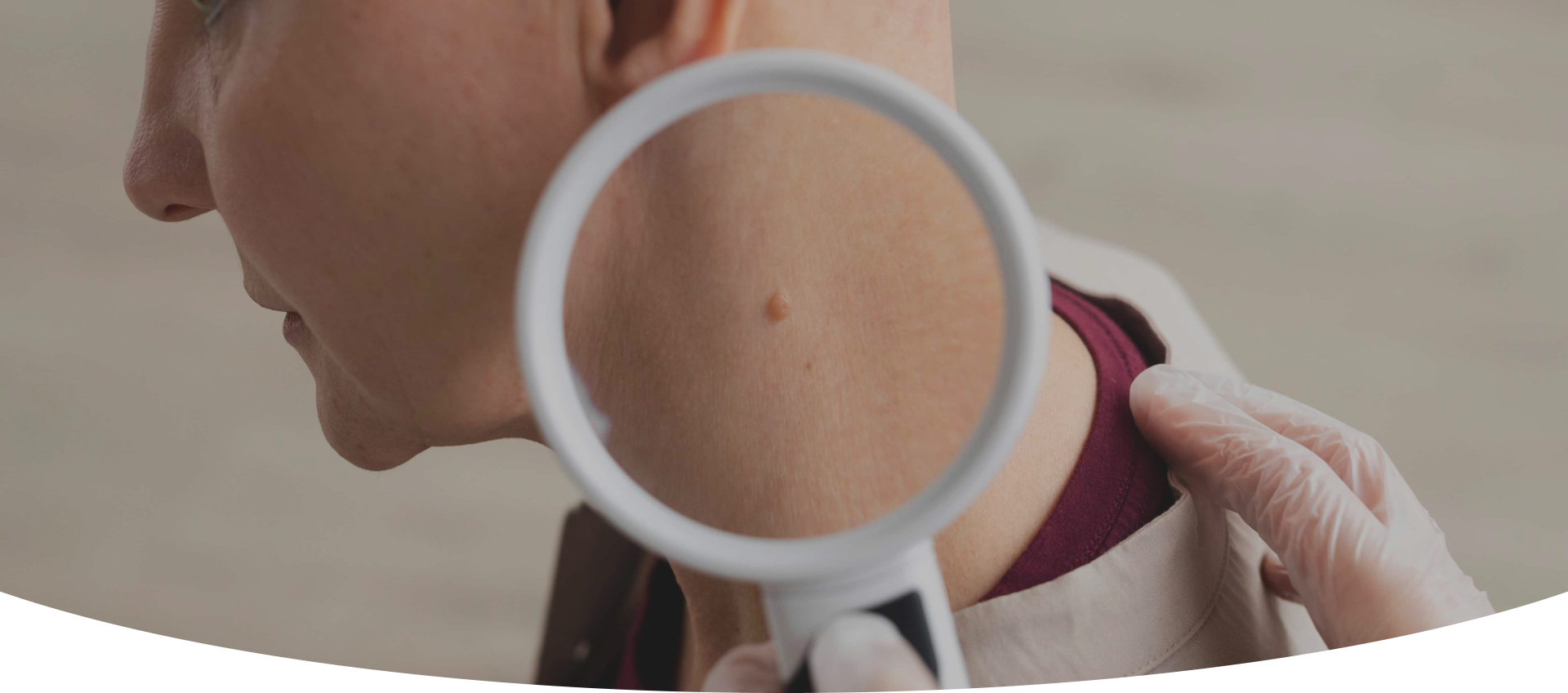
A skin growth is a buildup of skin tissue forming a soft bump, generally skin-coloured or slightly pigmented. Most are attached by a thin stalk and are entirely benign. They appear in areas of chronic friction: the neck, underarms, eyelids, groin and under the breasts. Risk factors include age, excess weight, hormonal changes and genetic predisposition. Unlike warts, which are viral in origin, skin tags are neither contagious nor cancerous.

Clinique Main d'Or treats four types of benign lesions. The skin tag (acrochordon) is the most common variety: soft, hanging and skin-coloured. A milium is a small white cyst filled with keratin, common on the face and around the eyes. An angioma is a red or cherry-coloured vascular lesion, more fragile than the others. Seborrheic keratosis is a rough, pigmented patch that appears with age. Because it can resemble melanoma, a professional assessment is essential before any removal.
Two methods are available at Clinique Main d'Or for treating skin tags and other benign lesions. Electrocoagulation uses a high-frequency current delivered by a fine stylus to precisely coagulate and destroy the lesion, which is ideal for skin tags and small vascular lesions. Cryotherapy involves applying liquid nitrogen to freeze and eliminate the tissue, and is particularly indicated for seborrheic keratoses. Both methods are non-invasive, require no stitches and leave little or no scarring. The method is chosen based on the type, size and location of the growth.
Drugstore wart products are not suitable for all types of growths and carry a risk of infection and scarring. Home ligation frequently leads to incomplete removal or infection. A skin tag that bleeds, changes colour or suddenly appears in large numbers warrants an assessment before any procedure. A professional at a medical-aesthetic clinic confirms the diagnosis, selects the appropriate method and minimizes the risk of after-effects. No downtime is required after the treatment and most patients resume their activities the same day.
The first visit includes a visual assessment to confirm the type of lesion and determine the appropriate method. The treatment is brief, generally fifteen to thirty minutes depending on the number and location of the growths. Several lesions can be treated in the same session. Slight redness or scabs are normal and disappear within a few days. Sun protection with a suitable SPF is required in the weeks following the treatment. Care recommendations are given to each patient at the end of the session.
The vast majority of skin growths are benign and pose no health risk. However, certain pigmented lesions, particularly seborrheic keratoses, can resemble melanoma and must be assessed before treatment. Signs that warrant a prompt consultation include sudden appearance, a change in size or colour, bleeding or pain. The professional’s role is to confirm benign status before any removal. Consulting first removes any ambiguity and ensures a safe treatment adapted to the lesion.
Clinique Main d'Or is a medical-aesthetic clinic located in Saint-Laurent, Montreal. The professionals carry out a personalized assessment of each type of skin growth. No standardized protocol is applied without a prior assessment. Electrocoagulation and cryotherapy are both available on site, with the method determined during the consultation. The approach is guided by more than 37 years of experience and by compliance with OIIQ standards. Each patient is supported from the identification of the lesion through to post-treatment care recommendations. Appointments can be booked online.