

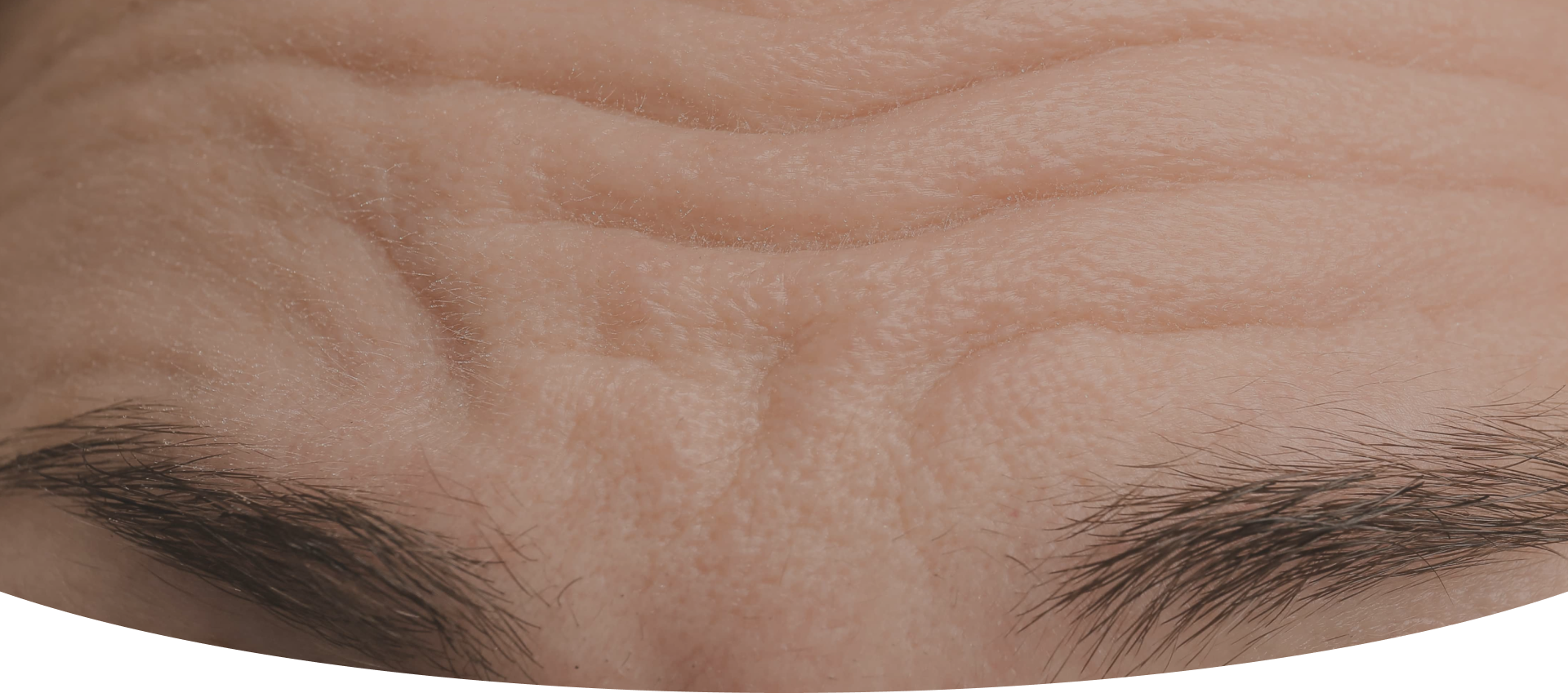


Forehead Wrinkles
Forehead wrinkles are among the first visible signs of facial aging. Often linked to repeated facial expressions and environmental exposure, they can evolve from simple expression lines into permanent creases. This page aims to clearly explain forehead wrinkles, their causes, natural prevention methods, and the medical-aesthetic clinic treatments available to soften them in a gradual and personalized way.


What are forehead wrinkles?
The forehead is one of the most active areas of the face on a daily basis. It is therefore common for wrinkles to appear there earlier than in other regions of the face.
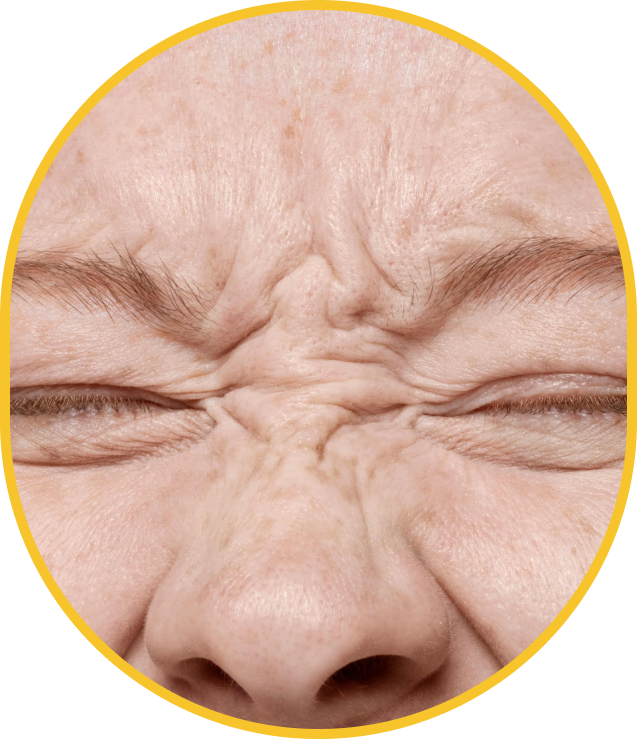
There are two main types of forehead wrinkles. Horizontal wrinkles run across the forehead from left to right and are caused by repeatedly raising the eyebrows. Vertical wrinkles located between the eyebrows are commonly known as frown lines, also called glabellar lines. They result from repeatedly furrowing the brows.
Although they often appear simultaneously, these wrinkles originate from different muscles, specifically the frontalis muscles for horizontal lines and the corrugator muscles for frown lines. This distinction is essential, as each type of wrinkle does not respond to treatments in the same way.
Learn more about lines and wrinkles
Dynamic wrinkles vs. static wrinkles: what is the difference?
Dynamic wrinkles are generally the first to appear. They are visible only during facial movements, for example when you furrow your brows or raise them. At this stage, the skin returns to a smooth appearance when the face is at rest.
Over time, the repetition of muscle contractions, combined with the gradual decrease in collagen and elastin, leads to a loss of skin elasticity. The wrinkles then become static, meaning they are visible even when the face is relaxed.
Identifying whether wrinkles are dynamic or static helps guide the treatment plan. Dynamic wrinkles generally respond better to neuromodulator injections, while static wrinkles often require a combined approach that may include dermal fillers.
Why do forehead wrinkles appear?
Forehead wrinkles result from several factors that act simultaneously over the years.
Repeated facial expressions, such as furrowing the brows or raising the forehead, are the primary mechanical cause. Added to this is natural skin aging. From the late twenties onwards, the production of collagen and elastin gradually slows down, which weakens the skin's structure.
Exposure to UV rays is one of the major accelerators of skin aging, a phenomenon often called photoaging. As the forehead is constantly exposed, it is particularly vulnerable. Pollution, smoking, dehydration, and oxidative stress also contribute to the degradation of skin quality.
Finally, genetics and skin type play a significant role. Thinner or lighter skin types tend to show lines on the forehead more quickly.
How to naturally soften forehead wrinkles
Natural approaches are particularly relevant for prevention and for forehead wrinkles at an early stage.
Daily sun protection remains the most effective measure. Applying a broad-spectrum sunscreen with an SPF of 30 or higher helps prevent UV-induced collagen degradation.
Adequate hydration—both internal, through sufficient water intake, and external, using appropriate topical skincare—helps maintain skin suppleness. Skincare products containing topical hyaluronic acid improve surface hydration, while retinol promotes cell turnover and supports collagen production. Peptides are also recognized for their role in supporting skin structure.
Facial massage can complement this routine. Gentle tapping along the forehead lines, moving from the center outward, promotes superficial muscle relaxation and better absorption of skincare products.
Neuromodulator injections for forehead wrinkles (Botox, Dysport, Nuceiva)
Botulinum toxin injections work by temporarily relaxing the muscles responsible for repetitive contractions. In the forehead, they primarily target the frontalis muscle for horizontal lines, as well as the corrugator and procerus muscles for frown lines.
At Clinique Main d’Or, the products used include botulinum toxin (e.g., Botox, Dysport, or others), all of which are Health Canada-approved formulations.
This treatment is particularly indicated for dynamic wrinkles, but also as a preventive measure for younger patients. The "baby Botox" approach aims to reduce the intensity of muscle contractions while maintaining natural facial expressions.
The session is quick, typically lasting 10 to 15 minutes, and does not require anesthesia. Injections are performed using very fine needles, and you can return to your daily activities immediately.
Initial effects usually appear between 3 and 7 days, with optimal results visible around 14 days. The duration of the effect varies from 3 to 6 months depending on individual metabolism and muscle habits. Precise dosing is essential to avoid a frozen look and to preserve facial harmony. In some cases, a slight brow lift effect may also be observed.
For more details, visit the page dedicated to injections of botulinum toxin.
Hyaluronic acid injections to fill forehead wrinkles
Injectable hyaluronic acid works differently. It helps restore subcutaneous volume and fill in established furrows that neuromodulators alone cannot correct.
Hyaluronic acid is a molecule naturally present in the human body, known for its biocompatibility. It is particularly indicated for deep static forehead wrinkles or to correct volume loss in the forehead area.
Results are visible immediately after the injection. The syringes generally contain a local anesthetic to minimize discomfort. Mild swelling may occur for 24 to 48 hours. The duration of the results varies between 6 and 12 months depending on the product used and the area treated.
This treatment is often combined with neuromodulators to address both the muscular cause and residual volume loss.
Complementary treatments to improve forehead skin quality
Certain complementary treatments can improve the texture and overall quality of the skin on the forehead.
Radiofrequency microneedling stimulates collagen production deep within the skin and improves skin firmness. HIFU, or high-intensity focused ultrasound, acts on the deep layers of the skin for gradual tightening over several months.
Chemical peels promote cell turnover and are useful for fine lines and sun damage. Microneedling with multivitamins improves skin hydration and radiance. Skinboosters, composed of non-crosslinked hyaluronic acid, help improve skin elasticity and quality over the long term.
For more information on HIFU
Forehead wrinkles — Botox or hyaluronic acid?
Botulinum toxin and hyaluronic acid are not competing treatments, but rather complementary ones.
Neuromodulators act on dynamic wrinkles by reducing muscle contractions. Results appear gradually and typically last from 3 to 6 months. They are particularly well-suited for expression lines.
Hyaluronic acid, on the other hand, fills in static wrinkles by restoring volume. Results are immediate and often persist for 6 to 12 months.
When forehead wrinkles are moderate to deep, a combination of both approaches is frequently recommended. A consultation helps determine the most appropriate strategy based on facial structure and individual expectations.
What is the price of Botox for forehead wrinkles?
The cost of treating forehead wrinkles depends on several factors, including the number of units required, muscle strength, and the areas treated, such as the forehead alone or in combination with the frown lines.
At Clinique Main d’Or, pricing for botulinum toxin (e.g., Botox, Dysport, or other) is $9 to $11 per unit.
As treatments require regular maintenance, injections are generally performed 2 to 3 times per year to maintain results. A consultation is essential to establish a personalized treatment plan and an accurate quote.
Detailed rates are available here: Our service rates
FAQ sur
Forehead wrinkle treatment: which option should you choose in Montreal?
At what age do forehead wrinkles appear?
Can you really remove forehead wrinkles without botulinum toxin?
How long does botulinum toxin last on the forehead?
Is forehead wrinkle treatment painful?


Clinique Main d'Or


