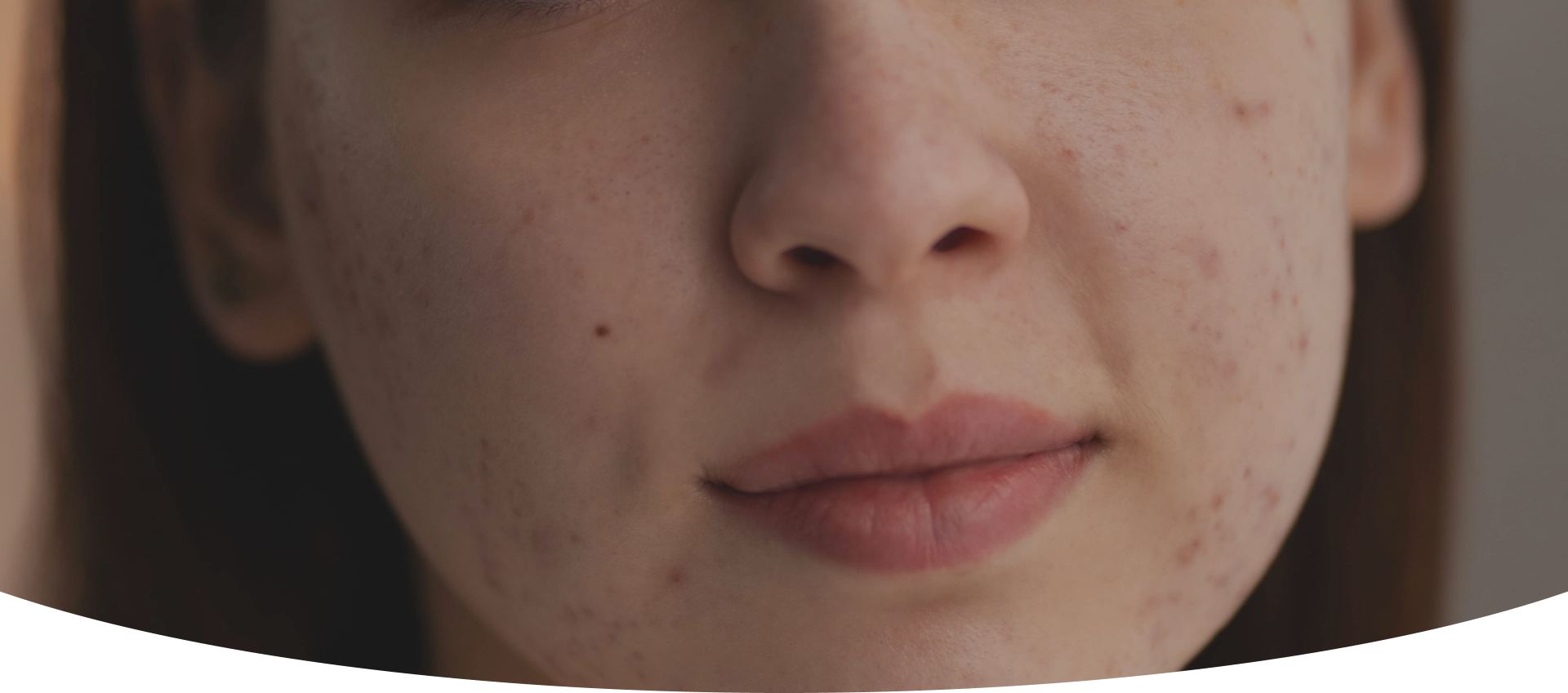
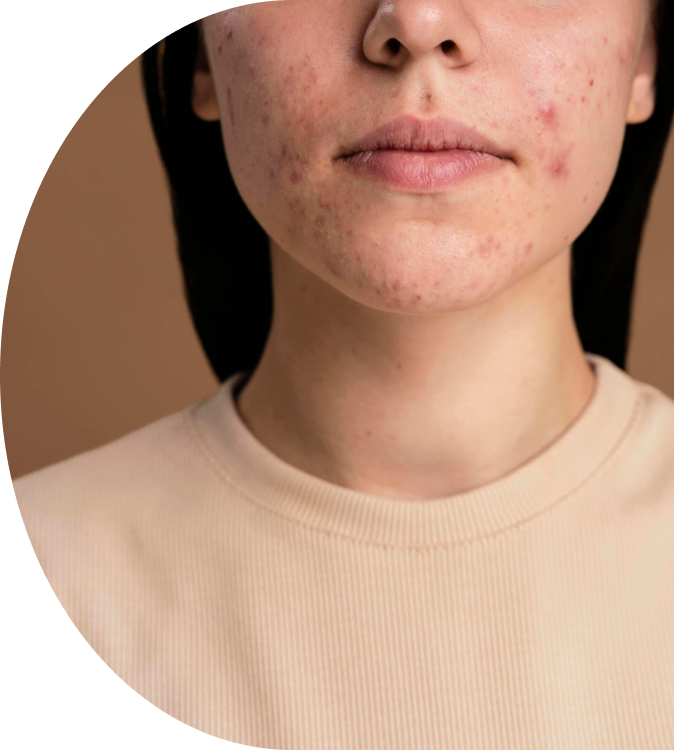
In Montreal, closed comedones are small, skin-colored bumps that appear when pores become clogged with sebum and dead skin cells. Because they remain beneath the skin's surface, they create an uneven texture that is difficult to treat on your own. At Clinique Main d’Or in Montreal, our professionals identify the root cause and provide safe treatments to unclog your pores.
What is a closed comedone and why should it be treated?
Closed comedones are small, flesh-coloured bumps that appear when pores become clogged with sebum, dead cells and impurities. Unlike open comedones (blackheads), these lesions stay beneath the surface of the skin, creating an uneven texture that is hard to treat yourself. Comedonal acne often leaves patients unsure: are these blackheads, whiteheads or something else? Understanding the causes of closed comedones helps you choose safe professional solutions and avoid the risk of scarring.
A closed comedone forms when a pore becomes clogged with a mix of dead cells, excess sebum and sometimes residue from cosmetic products. Unlike blackheads, it stays covered by a thin layer of skin, which gives it a white or flesh-coloured appearance.
Several factors can encourage them to appear:
Hormonal changes;
An unsuitable skincare routine;
Using cosmetics that are too rich or comedogenic.
In some cases, prolonged sun exposure can also cause solar comedones.
Questions fréquentes
How to prevent brown spots on the skin caused by the sun?
The key to preventing brown spots on the skin is rigorous sun protection. Daily application of a broad-spectrum sunscreen (SPF 50) is essential, even in winter or on cloudy days, as UV rays are the main cause of hyperpigmentation. In addition, wearing wide-brimmed hats and sunglasses reduces the impact of UV rays on the skin. The use of skin care products enriched with antioxidants, such as vitamin C or ferulic acid, also strengthens the skin’s defenses and limits the formation of brown spots on the face. Finally, avoiding prolonged exposure to the sun and adopting an appropriate skincare routine help to preserve an even, luminous complexion.
What is the best treatment for a persistent brown spot on the face?
To treat a persistent brown spot on the face, it’s advisable to opt for targeted dermatological treatments. Among the most effective options are chemical peels, which deeply exfoliate the skin and reduce hyperpigmentation, and laser treatments, which act on melanin production and help even out skin tone. Microneedling combined with radiofrequency is also an excellent choice, as it stimulates cell regeneration and promotes the absorption of depigmenting serums. For more resistant pigmentation spots on the face, creams containing hydroquinone or vitamin A derivatives (such as retinol) can be prescribed. After these treatments, daily sun protection is essential to prevent the spots from reappearing.
Is facial dark spot treatment suitable for all skin types?
The treatment of brown spots on the face can be adapted to most skin types, but requires adjustments according to skin colour and sensitivity. Light skin generally responds well to treatments such as light chemical peels or lasers, which eliminate pigmented cells without the risk of residual pigmentation, but darker or more sensitive skin requires a more cautious approach. In this case, it’s best to opt for gentler treatments such as microneedling or low-concentration depigmenting creams, to avoid side effects such as post-inflammatory hyperpigmentation. A dermatologist will determine the most suitable treatment for each skin type, guaranteeing safe and effective results in treating brown spots on the face.
How many sessions are required?
The number of sessions varies depending on the chosen treatment, the severity of the closed comedones, and how your skin responds. Sessions are spaced out to allow the skin to recover. Some people see improvement after a few sessions, while others require more regular follow-ups to maintain results. Periodic maintenance often helps prevent the reappearance of closed comedones. During your consultation, our professionals will establish a personalized schedule based on the condition of your skin.
Injections de toxine botulique (ex. : Botox, Dysport ou autre)
Front, pattes d’oie, glabelle
32 $ à 350 $ + tx selon la zone
Rides statiques (volume)
Injection d’acide hyaluronique (AH)
Sillons, lèvres, pommettes
280 $ à 550 $ + tx par seringue
Perte de fermeté et texture
Radiofréquence par «microneedling»
Visage, cou
500 $ à 900 $ par séance
Ridules superficielles et éclat
Laser CO2 Cool Peel
Visage complet
700 $ + tx
FAQ
Comment prévenir les taches brunes sur la peau causées par le soleil ?
Quel est le meilleur traitement pour une tache brune visage persistante ?
Le traitement des taches brunes au visage est-il adapté à toutes les peaux ?
How to prevent brown spots on the skin caused by the sun?
What is the best treatment for a persistent brown spot on the face?
How many sessions are required?
How many sessions are required?
How many sessions are required?
Beauty is the illumination of the soul!
With the emergence of non-surgical aesthetic treatments, Clinique Main d'Or was founded by Mirna Saadé, a clinical nurse, with the mission of offering injectable aesthetic treatments and skin care where safety and effectiveness are the priorities.