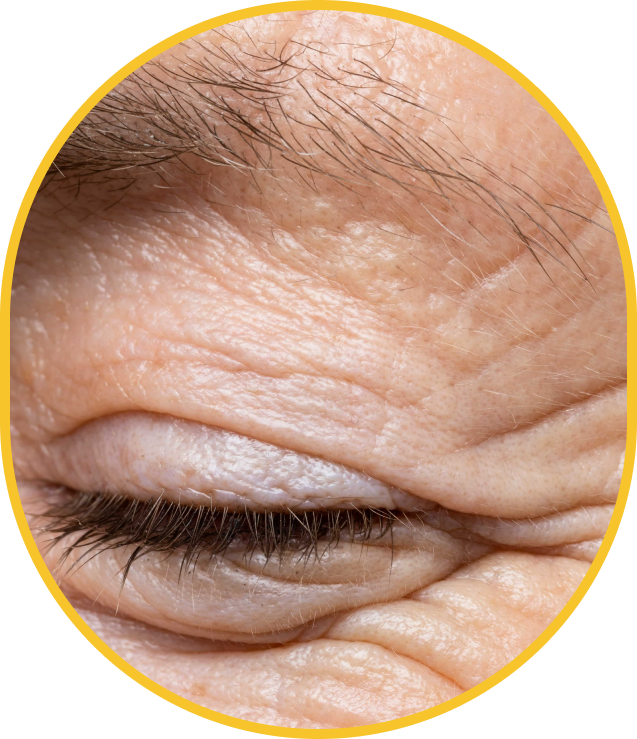

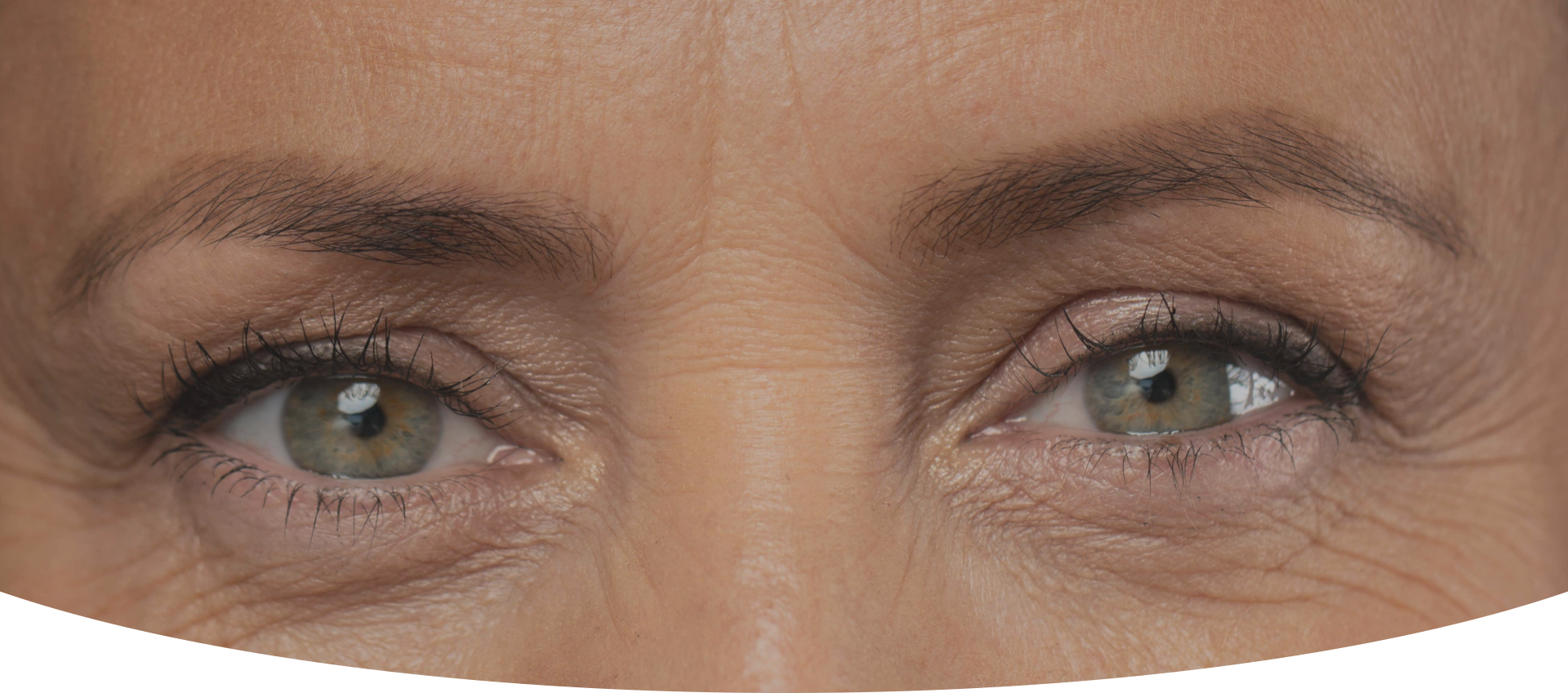
Wrinkles around the eyes are among the first visible signs of skin aging. Crow’s feet and under-eye wrinkles result from a combination of repeated movements, thinning skin and a gradual decrease in collagen.
This page presents the causes of eye-area wrinkles, the difference between dynamic and static wrinkles, and the non-surgical treatments that can be considered at the medical-aesthetic clinic Clinique Main d’Or in Montreal.

With age, collagen and elastin production decreases, leading to a loss of firmness. This change is particularly pronounced around the eyes, where the skin is very thin.
The orbicularis muscle is constantly used when blinking, smiling or squinting. These repeated contractions promote the appearance of crow’s feet.
Exposure to UV rays also accelerates the breakdown of the skin’s support fibres..
Dynamic wrinkles appear with facial expressions. Crow’s feet are the most common example and are linked to muscle activity.
Static wrinkles are visible at rest. They often appear as fine lines or crepey skin under the eyes and are associated with the loss of collagen and hydration.
Identifying the type of wrinkle helps guide the choice of the most appropriate treatment.
Several non-surgical approaches can be considered depending on the type of wrinkles and skin quality.
Botulinum toxin (e.g. Botox; Dysport; or other) is mainly used for dynamic wrinkles. It temporarily reduces the contraction of the orbicularis muscle, softening the appearance of crow’s feet.
Results appear gradually and are temporary. To learn more, see the page on Botox treatment.
Skinboosters, such as Skinvive, aim to improve skin hydration and quality. They are particularly suited to static wrinkles and crepey skin under the eyes.
More information is available on skinbooster injections.
Radiofrequency microneedling stimulates collagen production and can improve the firmness and texture of the skin around the eyes.
Discover this option on the page dedicated to radiofrequency microneedling.
PRP treatment uses growth factors from the patient’s own blood to support skin quality and regeneration.
Laser may be considered for more pronounced wrinkles or altered skin texture, depending on the clinical assessment.
Dynamic wrinkles mainly respond to botulinum toxin, while static wrinkles can benefit from treatments focused on skin quality and collagen stimulation. A personalized assessment is essential.
Daily use of sun protection, adequate hydration and gently applied skincare can help slow the appearance of wrinkles.
A consultation makes it possible to assess eye-area wrinkles as well as related concerns such as hollow under-eyes and dark circles or drooping eyelids.