

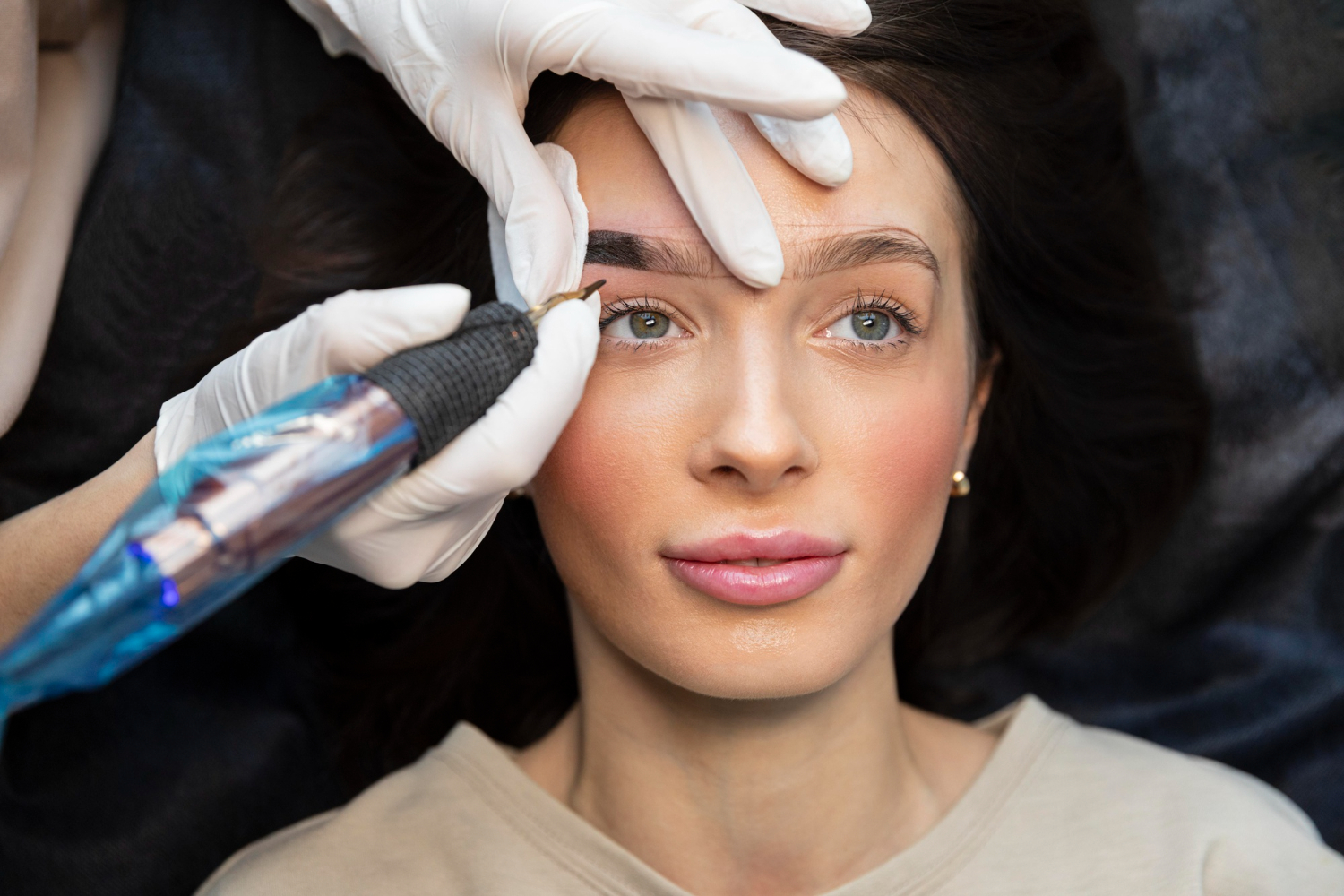

Between microblading, nano brows, and traditional eyebrow tattooing, it is hard to decide on your own. Clinique Main d’Or, a medical-aesthetic clinic in Saint-Laurent (Montreal), compares the techniques, longevity, skin types, and prices here to guide you toward the option best suited to your eyebrows and your expectations. Explore the clinic's semi-permanent eyebrow makeup to learn more.
"Microblading" consists of manually depositing pigment through fine, linear incisions that mimic natural hairs. Performed with a manual blade, without a machine, it creates a very natural hair-by-hair effect, ideal for reshaping the eyebrow line.
The result is semi-permanent: it fades gradually over time. This is the reference technique for comparing microblading and nano brows, which we detail in the following section.
"Nano brows," also called nanoblading, deposit tiny dots of pigment using a dermograph equipped with a very fine micro-needle. The deposit is more controlled and generally less traumatic than the incisions used in microblading.
Depending on the desired look, the result can remain hair-by-hair or provide a densification effect. Even if the visual effect is similar to microblading, nano brows rely on a machine and a different level of precision, which changes the healing process and how it adapts to the skin.
Eyebrow tattooing deposits pigment deeper into the skin, which results in a permanent outcome. It is therefore distinct from semi-permanent makeup, which fades and allows for regular touch-ups.
This depth and the type of product used also explain why a tattoo's color can change over the years. To better understand how permanence works, check out our article on permanent makeup.
Here is an overview of the three approaches to quickly situate microblading or nano brows against eyebrow tattooing.
Skin type directly influences pigment retention. On oily skin or skin with enlarged pores, microblading often does not hold as well, as the strokes can fade and become blurry: "nano brows" then offer a more stable result.
Dry or normal skin is more versatile and tolerates both techniques well. For sensitive or mature skin, healing can vary more, which is why an assessment during a consultation is important rather than relying on a universal rule.
Microblading and "nano brows" are semi-permanent: they last between 1 and 3 years, depending on skin type and maintenance. The longevity of eyebrow microblading also depends on sun exposure and daily skincare.
Periodic touch-ups are necessary to maintain intensity and definition. Eyebrow tattooing is permanent, but its color will still evolve over time, which sometimes requires correction.
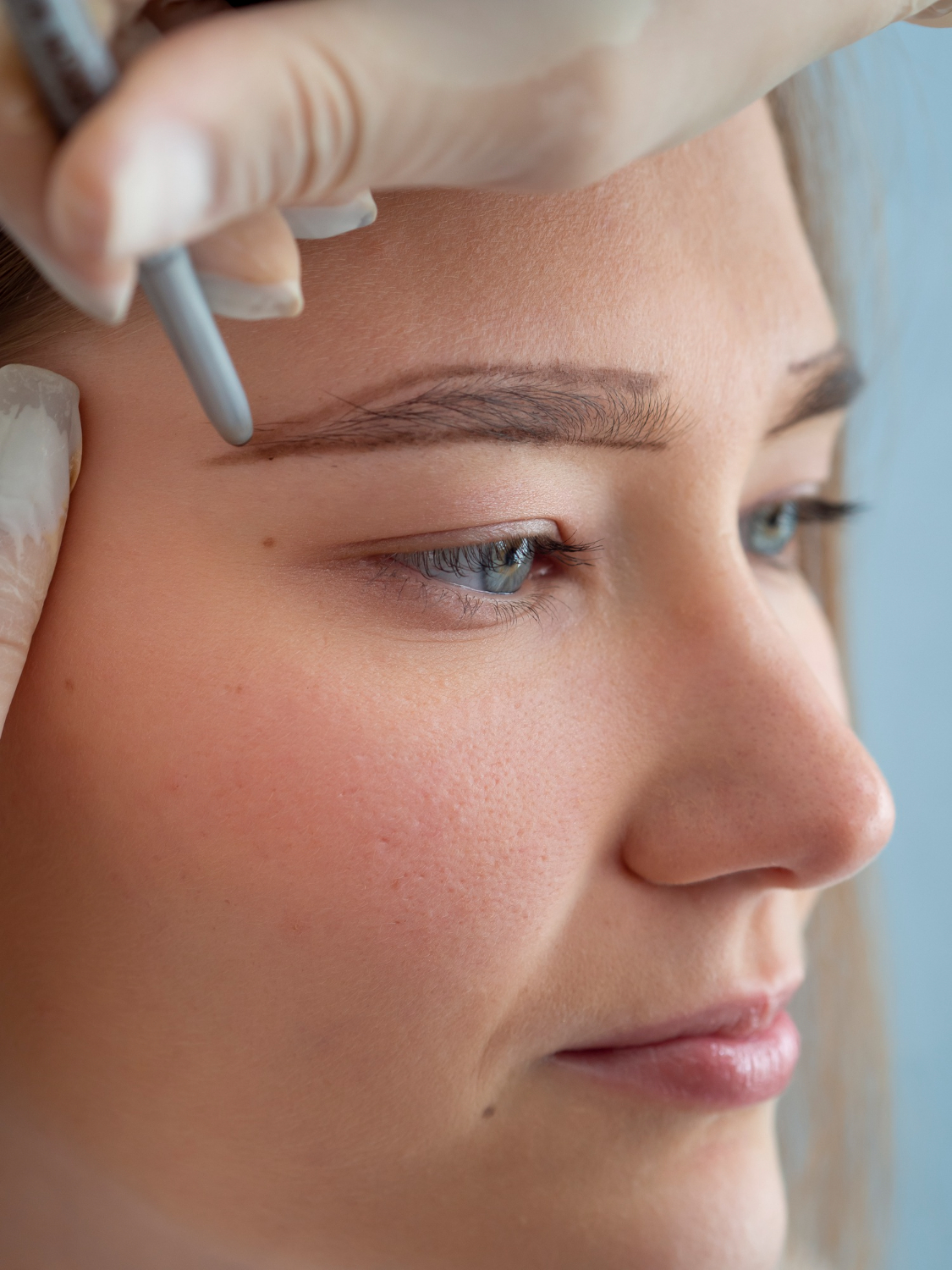
A session begins with an assessment, followed by drawing the shape before the pigment is applied. Topical anesthesia helps minimize discomfort during the procedure.
The healing process involves a phase of redness, pigment that appears darker at first before fading, and the formation of small scabs that must not be picked. The final result can be assessed once the skin has completely healed. A perfecting touch-up is common to refine the final look.
The price of eyebrow microblading varies depending on the chosen technique, the region, the professional's expertise, the pigments used, and whether a touch-up is included. A fair price should cover the consultation, the initial session, and the perfecting touch-up.
It is better not to choose based solely on the lowest price: the quality of the equipment and the work directly influences the longevity and the final result. For an accurate price, request a quote from the clinic.
For sparse brows or those with limited regrowth, the fuller look of “nano brows” can define a complete arch and create convincing visual density.
Microblading for sparse eyebrows remains relevant for filling in targeted areas when some hair remains. Among the drawbacks of eyebrow microblading, its shorter longevity on certain skin types influences the choice of technique, as do skin type and remaining hair density.
To arrive prepared for your consultation, gather some reference photos and set realistic expectations. Mapping is then used to trace symmetry and harmony adapted to your facial features.
Use this consultation to ask the professional any questions you have: the recommended technique, aftercare, and touch-up frequency. Also consider the skincare routine to follow for micropigmentation. The final shape is decided together before any pigment is applied.
Clinique Main d’Or, a medical-aesthetic clinic in Saint-Laurent (Montreal), offers eyebrow micropigmentation, a form of semi-permanent makeup. Its professionals perform a personalized assessment of skin type and shape before each session.
This approach is based on the expertise of the founder, Mirna Saadé, a nurse since 1987 and a member of the OIIQ. The goal: a personalized consultation that guides you toward the technique best suited to your skin and your expectations.
In summary, the choice between microblading and nano brows depends primarily on your skin type and the desired look, whether hair-by-hair or filled-in. Eyebrow tattooing is more suitable if you are comfortable with a permanent result.
No technique is universally better: the decision is made after a personalized assessment, which takes into account your skin, your eyebrow density, and your long-term aesthetic goals.
With the emergence of non-surgical aesthetic treatments, Clinique Main d'Or was founded by Mirna Saadé, a clinical nurse, with the mission of offering injectable aesthetic treatments and skin care where safety and effectiveness are the priorities.


