

.png)
.svg)
Milia are tiny white or yellowish bumps that appear on the face, most often around the eyes, and are among the most commonly misidentified skin concerns. Hard, persistent, and impossible to pop, they look like whiteheads but behave nothing like them. Standard acne treatments have no effect on milia because their origin is entirely different. At Clinique Main d'Or, professionals identify and remove milia safely using precise techniques. This article explains the key differences, causes, and proper treatment of milia in a medical aesthetics clinic.
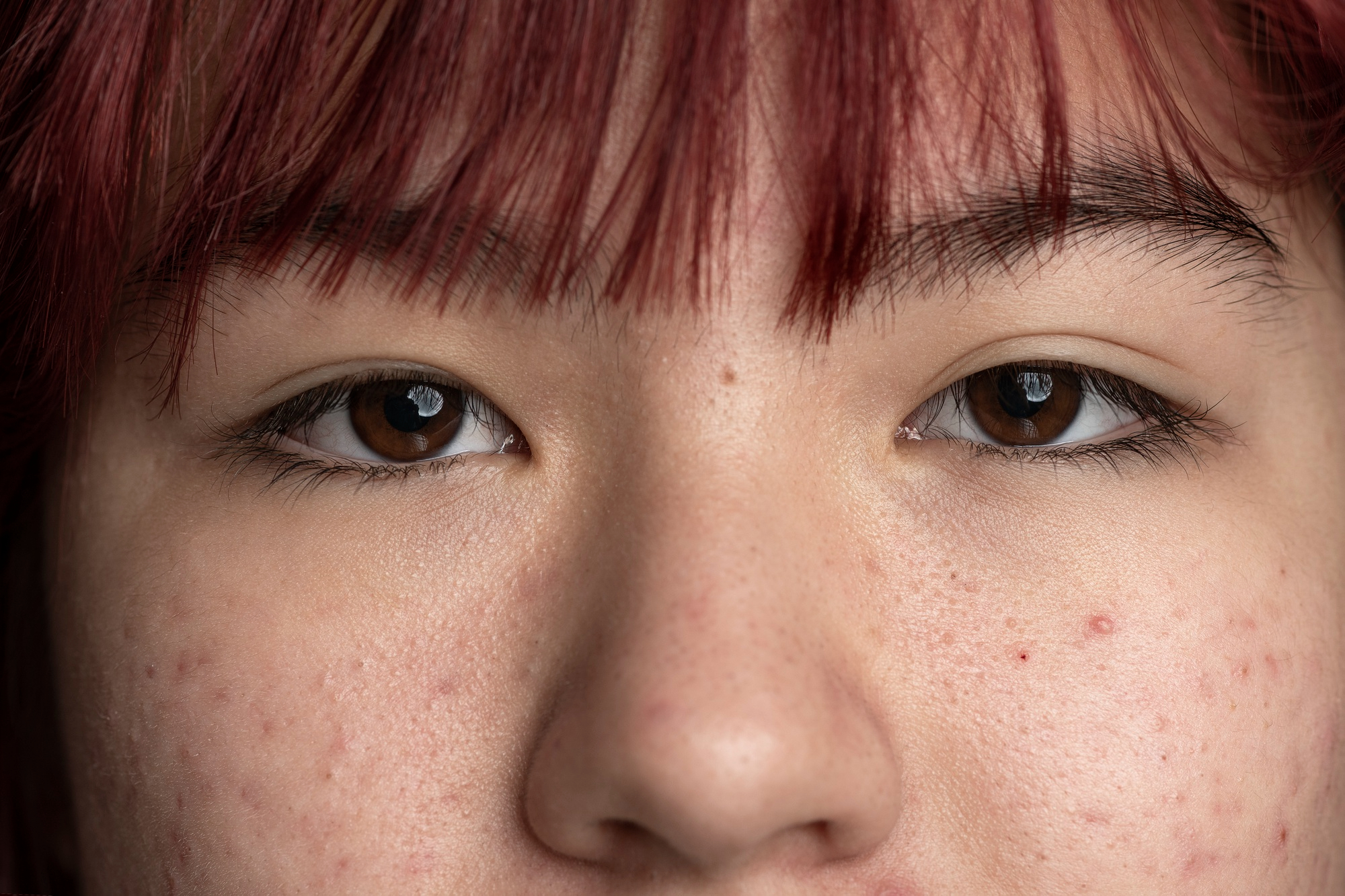
Milia are small epidermal cysts filled with trapped keratin, a naturally occurring protein in the skin. Unlike whiteheads, they contain no sebum and no pus. They appear as firm, white or yellowish bumps measuring 1 to 3 mm, located just beneath the skin's surface with no visible pore opening. Milia on the face are non-inflammatory, painless, and entirely benign. They never become red or swell the way acne lesions do. The most common locations are around the eyes, on the eyelids, and across the cheeks, with less frequent appearances on the nose, forehead, and temples. Without professional intervention, milia can persist for months or years.
The distinction between milia and whiteheads comes down to five clinical criteria. Content: milia contain hard, solid keratin; whiteheads contain soft sebum mixed with dead cells. Texture: milia feel like a small pebble beneath the skin; whiteheads are compressible and can be expressed. Pore involvement: milia have no pore opening; whiteheads are closed comedones with a sealed pore. Inflammation: milia are entirely non-inflammatory; whiteheads may become mildly tender. Treatment response: milia require professional removal; whiteheads respond to exfoliants, BHAs, and gentle extraction. Understanding these differences prevents ineffective treatment and unnecessary scarring.
The primary cause of milia is impaired cell turnover: dead skin cells fail to shed properly and become trapped beneath the skin surface, hardening into keratin cysts. Occlusive or overly rich skincare products, especially heavy eye creams, can block the skin's natural renewal and are a leading trigger around the eyes. Sun damage thickens the stratum corneum over time, increasing the risk of keratin entrapment. Secondary causes include skin trauma such as burns, dermabrasion, or blistering, as well as certain medications like topical steroids. Genetic predisposition also plays a role, meaning some individuals form milia more readily regardless of their skincare habits.
Unlike whiteheads, milia have no pore opening. There is no channel through which the trapped keratin can be expressed by squeezing or picking. Attempting to pop milia at home almost always results in skin damage: inflammation, infection, and permanent scarring, particularly in the delicate under-eye area. Over-the-counter exfoliants like salicylic acid and glycolic acid can help prevent new milia from forming, but they cannot eliminate cysts that are already present. Milia removal requires a trained professional using sterile instruments and a controlled technique. Self-diagnosis also carries risks, as milia can occasionally be mistaken for other skin lesions that warrant medical evaluation.
Electrocauterization uses a fine heated needle to deliver a controlled pulse of energy directly into the keratin cyst, dissolving it without cutting or damaging the surrounding skin. The procedure is fast and precise: each milia is treated in seconds, and multiple cysts can be addressed in a single session. Electrocauterization is especially well suited to milia on eyelids and the under-eye area, where the skin is thin and precision is critical. Post-treatment, a small scab forms over each treated site and falls away naturally within 3 to 7 days, leaving no permanent mark. No anesthesia is required in most cases, and discomfort is minimal.

Cryotherapy applies liquid nitrogen to freeze and destroy milia cysts. It is particularly effective for clusters of multiple milia or more resistant lesions. Post-treatment effects are slightly more pronounced than with electrocauterization: mild redness and a small blister may appear temporarily and resolve within a few days. Professional manual extraction, performed by a cosmetologist using a sterile needle, is an option for very superficial primary milia that sit close to the skin surface. All three approaches, electrocauterization, cryotherapy, and professional extraction, are available at Clinique Main d'Or. The appropriate technique is determined during an initial assessment of the cysts' type, depth, and location within the face.
Choosing non-comedogenic, lightweight skincare products is the most effective first step, especially for the eye area, where heavy creams often trigger milia. Incorporating a gentle chemical exfoliant, such as glycolic acid, or a low-strength retinoid into your routine supports the regular shedding of dead skin cells and reduces keratin buildup over time. Applying a broad-spectrum SPF 50+ sunscreen daily is equally important, as UV exposure thickens the skin's surface layer and increases the risk of milia. Thorough evening cleansing removes makeup and product residue before it accumulates. If milia recur frequently, a skincare routine review with a professional at a medical aesthetics clinic can help identify the products or habits that trigger them.
At Clinique Main d'Or in Montreal, medical aesthetics professionals assess each client's milia, evaluating type, depth, and location, before recommending a removal approach. Electrocauterization is the clinic's first-line treatment: fast, precise, and especially effective for milia on eyelids and around the eyes. Cryotherapy and cosmetology-based extraction are available as complementary options depending on the lesion profile. Results are visible immediately, as treated milia are removed in a single session. A consultation allows the professional to confirm the diagnosis and establish a treatment plan tailored to the client's skin.
The skin around the eyes is the thinnest on the entire face. This reduced thickness limits the natural elimination of trapped keratin, making the eyelid and under-eye area the most common site for milia formation. Applying overly rich or occlusive eye creams compounds this vulnerability by further blocking natural cell renewal in a zone already prone to keratin buildup. Friction from rubbing the eyes or vigorous makeup removal can also trigger secondary milia on eyelids. Electrocauterization is the most appropriate removal technique for this zone because its precision allows targeted treatment of each cyst without affecting the surrounding delicate skin. Under no circumstances should eyelid milia be extracted at home.
Neonatal milia, also called milk spots, affect a significant proportion of newborns and appear on the face, scalp, and torso. They resolve entirely on their own within a few weeks and require no treatment beyond gentle daily cleansing with warm water. Adult milia, both primary and secondary, do not follow the same pattern. They tend to persist without professional milia removal and rarely clear spontaneously. Primary adult milia are often linked to genetics or skincare habits, while secondary adult milia follow skin trauma such as burns, dermabrasion, or prolonged sun damage. Only adult milia warrant professional assessment and treatment at a medical aesthetics clinic.
Several ingredients actively support milia prevention by promoting cell turnover. Low-strength retinoids accelerate the shedding cycle. Glycolic and lactic acids exfoliate the stratum corneum, reducing keratin buildup. Salicylic acid clears pores and is particularly useful when milia coexist with closed comedones. On the other side, heavy occlusives such as mineral oil, petrolatum, and lanolin should be avoided on milia-prone skin, especially around the eyes. Niacinamide and vitamin C are well-tolerated alternatives that support skin barrier function without clogging. High concentrations of fragrance or alcohol can irritate the skin and contribute to secondary milia via inflammation. A professional skincare routine review can identify occlusive products in your current regimen.
Milia are not whiteheads. They are keratin cysts with no pore opening, no inflammation, and no response to conventional acne treatments. Attempting to pop them causes scarring; the only safe approach is professional milia removal using electrocauterization, cryotherapy, or careful manual extraction by a trained practitioner. Prevention relies on lightweight non-comedogenic products, regular gentle exfoliation, and daily sun protection. For Montreal residents seeking professional treatment, Clinique Main d'Or offers precise assessment and removal, with visible results in the same session. The next step is a consultation to identify the type and depth of milia and establish the right approach for your skin.
Dans l'émergence des soins esthétiques non chirurgicaux, la clinique Main d'Or a été fondée par Mirna Saadé - infirmière clinicienne, avec pour mission d'offrir des soins esthétiques injectables et des soins de la peau où la sécurité et l'efficacité seront les priorités.
%201.png)


